foreignlanguages.gov.mt

Interesting Facts about Spain

Total Population: 46,5 million

Capital: Madrid

Life Expectancy: 83.2 years

Highest Mountain: Mount Teide – 3 718 meters above the sea

Land Area: 505,990 km2 (195,360 square miles)

Largest Lake: Lago de Sanabria

National Day: 12th October

Monarch: King Felipe VI

Currency: Euro

Official Language: Spanish

Other languages: Catalan, Galician, Basque

Religion: 68% Roman Catholic

Member of Nato: Yes

Member of EU: Yes

National Song: Marcha Real

Time Zone: CET +1, CEST +2

Country Number/Prefix: +34

Country Code: ES
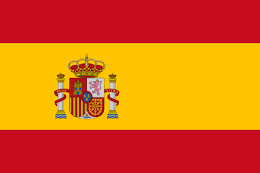
Spanish Flag


Did you know that?  

      • It’s the World’s largest producer of Olive Oil. When you think of Olive Oil, Italy probably comes to your mind at first, but in reality, Spain is producing about 44% of the total amount of Olive Oil in the world! Andalusia is the region that produces the most Olive Oil.


      • It has the highest amount of bars in all of Europe. Are you longing for that refreshing “cerveza”? You will not have any problem at all to find a nice bar. There are cafés and bars open both during the day and evening/night.


      • It has more than 8000 Kilometres of beaches. If you combine all Spanish beaches into one stretch, it would be 8000 kilometers long (approx. 4 970 miles). So, it shouldn’t come as a surprise that this is one of the most popular destinations for a sunny vacation! Several of the best beaches in Europe can be found on the coasts of the Spanish mainland as well as the Spanish islands, such as Balearic Islands and the Canary Islands.


      • It is home to the World’s Oldest Restaurant. The restaurant called Botin has been open since 1725, which is a world record in terms of a restaurant that’s still operating. It’s a great place for traditional Spanish food.


      • It is the second biggest country in the EU. Only France is bigger when it comes to countries that are members of the European Union. If you count Russia and Ukraine, Spain comes in fourth place in terms of Europe’s largest countries overall.


      • There’s a Spanish New Year’s custom where you eat 12 grapes. It is pretty unusual but a fun tradition where one aims to eat 12 grapes with one’s family when the clock turns 12. The goal is to eat 1 grape each time the clock hits a beat. If you succeed, it’s said that you’ll get lucky for the rest of the year. The tradition was made popular by the wineries who wanted to get rid of excess grapes.


      • Spanish is the world’s second most spoken mother tongue. English is the most widely spoken language in the world overall, but most people have English as their second language. In terms of Mother Tongue, the Chinese language trumps the first place, and Spanish comes in at second. The Spaniard’s travels and conquerings around the world have spread the Spanish language worldwide! And that’s certainly one of the most interesting facts about Spain and the country’s history.


      • Spain has 44 UNESCO World Heritage sites. Only Italy and China have more UNESCO world heritage sites. Some of the most famous historic sites in Spain include Alhambra, Sagrada Familia, Real Alcazar, Mosque of Cordoba, Burgos Cathedral, and Tower of Hercules just to mention a few. Additionally, there are several natural world heritage sites as well, such as Teide National Park, Palmeral of Elche, Pirineos (Monte Perdido), and Las Medulas just to mention some of them.


      • Traditionally each person has two surnames. It is a Spanish tradition to have two surnames. The first one is the father’s surname and the second one is the mother’s surname. As an example, it would be possible to be named Juan Gonzales Lopez or Carmen Garcia Sanchez.


      • Spain still has a king. Just like Sweden and the United Kingdom, Spain has a king, which is still the head of state, but with little to no actual power over the country’s laws and regulations. The current King of Spain is Felipe VI.


      • More than 1 million hectares are dedicated to wine. There’s no shortage of wine when it comes to Spanish wines, and there are lots of variations. Besides regular white and red wine, vineyards are also producing Cava, which is the Spanish equivalent to Champagne. Worldwide, it’s the red wines from Spain that have become most famous, especially Rioja wines and Ribera del Duero.


      • The national anthem of Spain has no words.


      • Spain’s Christmas lottery has the world’s biggest payout. It’s called El Gordo (which translates to the fat one).
         
      • It’s the only European country with cities on African soil – Ceuta and Melilla.


      • La Tomatina is an annual festival held in Spain where people throw thousands of tomatoes at each other.


    • The Spanish equivalent to the tooth fairy is a mouse, better known as Ratoncito Pérez.
       
    • The top things that Spain is famous for around the world are flamenco, paella, tapas, sangría, Corrida de Toros, siesta and football.
The Department
Privacy Overview

This website uses cookies so that we can provide you with the best user experience possible. Cookie information is stored in your browser and performs functions such as recognising you when you return to our website and helping our team to understand which sections of the website you find most interesting and useful.