foreignlanguages.gov.mt

Spanish Feasts

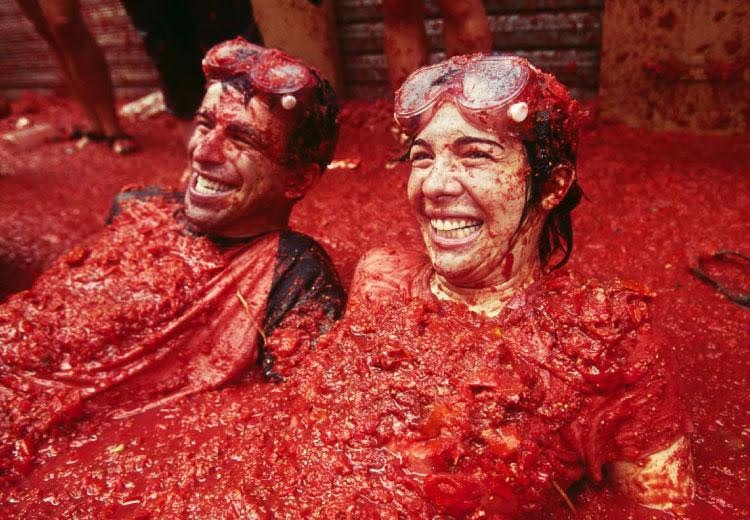
    1. La Tomatina – is a festival that is held in the Valencian town of Buñol, in the East of Spain 30 kilometres from the Mediterranean, in which participants throw tomatoes and get involved in a tomato fight purely for entertainment purposes. Since 1945 it has been held on the last Wednesday of August, during a week of festivities in Buñol.                                                                                                                                                      
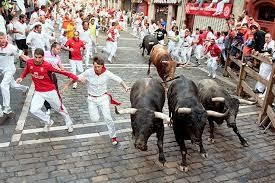
    2. Los San Fermines – is a week-long, historically rooted celebration held annually in the city of Pamplona, Navarra, in northern Spain. The celebrations start at noon on July 6 and continue until midnight on July 14. Celebrations start with fireworks and the popular song Pobre de mí is sung at the end. The most famous event is the running of the bulls, which begins at 8 in the morning from July 6 to 14, but the festival involves many other traditional and folkloric events. It is known locally as Sanfermines and is held in honour of Saint Fermin, the co-patron of Navarre.                                                                                                                                                                                                                                                                
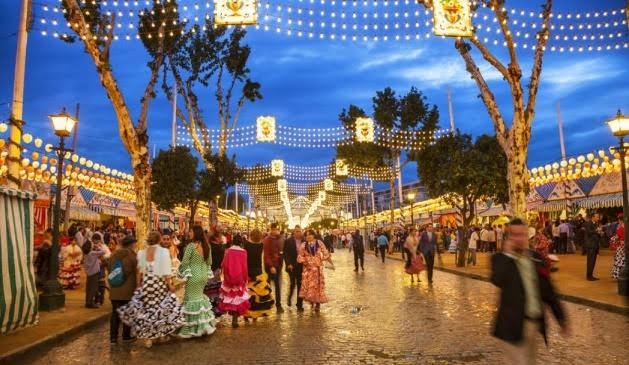
    3. Las Ferias de Abril – is held in the Andalucian capital of Seville, Spain. The fair generally begins two weeks after Semana Santa, or Easter Holy Week. The fair officially begins at midnight on Saturday, and runs for seven days, ending on the following Saturday. Each day the feast begins with the parade of carriages and riders, at midday, carrying Seville’s leading citizens which make their way to the bullring, La Real Maestranza, where the bullfighters and breeders meet. For the duration of the fair, the fairgrounds and a vast area on the far bank of the Guadalquivir River are totally covered in rows of casetas (individual decorated marquee tents which are temporarily built on the fairground). These casetas usually belong to prominent families of Seville, groups of friends, clubs, trade associations and political parties. From around nine at night until six or seven the following morning, at first in the streets and later only within each caseta, there are crowds partying and dancing sevillanas, drinking Sherry, manzanilla or rebujito and eating tapas. This fair also has an amusement park that comes with it and has many games to play along with roller coasters to ride.                                                                                                                                                          
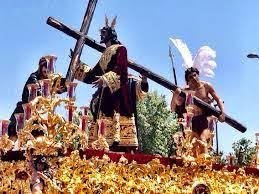
    4. Semana Santa – is the week before Easter. Spain is very famous for the religious festivities and processions that are done during this week.                                                                                                                                                                                                                                                                                               
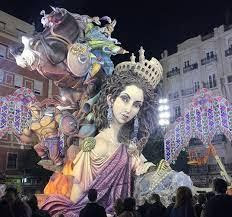
    5. Las Fallas – Las Fallas is celebrated in Valencia every year from March 15th until March 19th. Las Fallas is Valencia’s biggest annual festival. It’s a traditional celebration held in commemoration of Saint Joseph. But it’s better described as a massive 5-day long street party in and around the city of Valencia. Over 700 huge, largely papier-mâché statues or monuments, that took a year to build, are placed throughout the city and in neighbouring towns. The focus of this festival is the creation and eventual burning of these monuments, called fallas. The fallas, made up of several ninots (puppets or mannequins), often depict satirical scenes and current events. Valencian neighbourhoods get together and work for nearly the entire year to create their own falla. On March 19, after days of festivities, participants burn the fallas in huge bonfires, and all the hard work goes up in smoke. By popular vote, two of the ninots are spared every year. This is called the ninot indultat, or the pardoned mannequin, and it’s exhibited in Valencia’s Fallas Museum.

La Tomatina

Los San Fermines

Las Ferias de Abril

La Tomatina Image
Los San Fermines
Las Ferias de Abril

Semana Santa

Las Fallas

Semana Santa
Las Fallas
The Department
Privacy Overview

This website uses cookies so that we can provide you with the best user experience possible. Cookie information is stored in your browser and performs functions such as recognising you when you return to our website and helping our team to understand which sections of the website you find most interesting and useful.